Ottis Kermit Cole's Stories
Part One of Two
TITLE: Ottis Kermit Cole’s Stories – Part 1 of 2
AUTHOR: James R. Stokely III
PERMISSION to publish granted by the author.
Wilma Dykeman grew up listening to her kin tell stories. Even after she got married to James R. Stokely, Jr. at the age of 20, she continued to sit with her mother and grandmother and aunts and uncles. With great intentionality, she drew them out and wrote down their stories. These would be the raw material that formed the foundation of her work, the rich soil out of which grew her own stories and books and talks.
I never saw Wilma more in her comfort zone – her happy place– than on Sunday afternoons in her mother Bonnie Cole Dykeman’s home at the head of Beaverdam Creek just north of Asheville. That home, which was Wilma’s childhood home and which Wilma wrote about in her memoir Family of Earth, is now owned by the University of North Carolina Asheville and is managed as part of their Wilma Dykeman Writer-in-Residence Program.
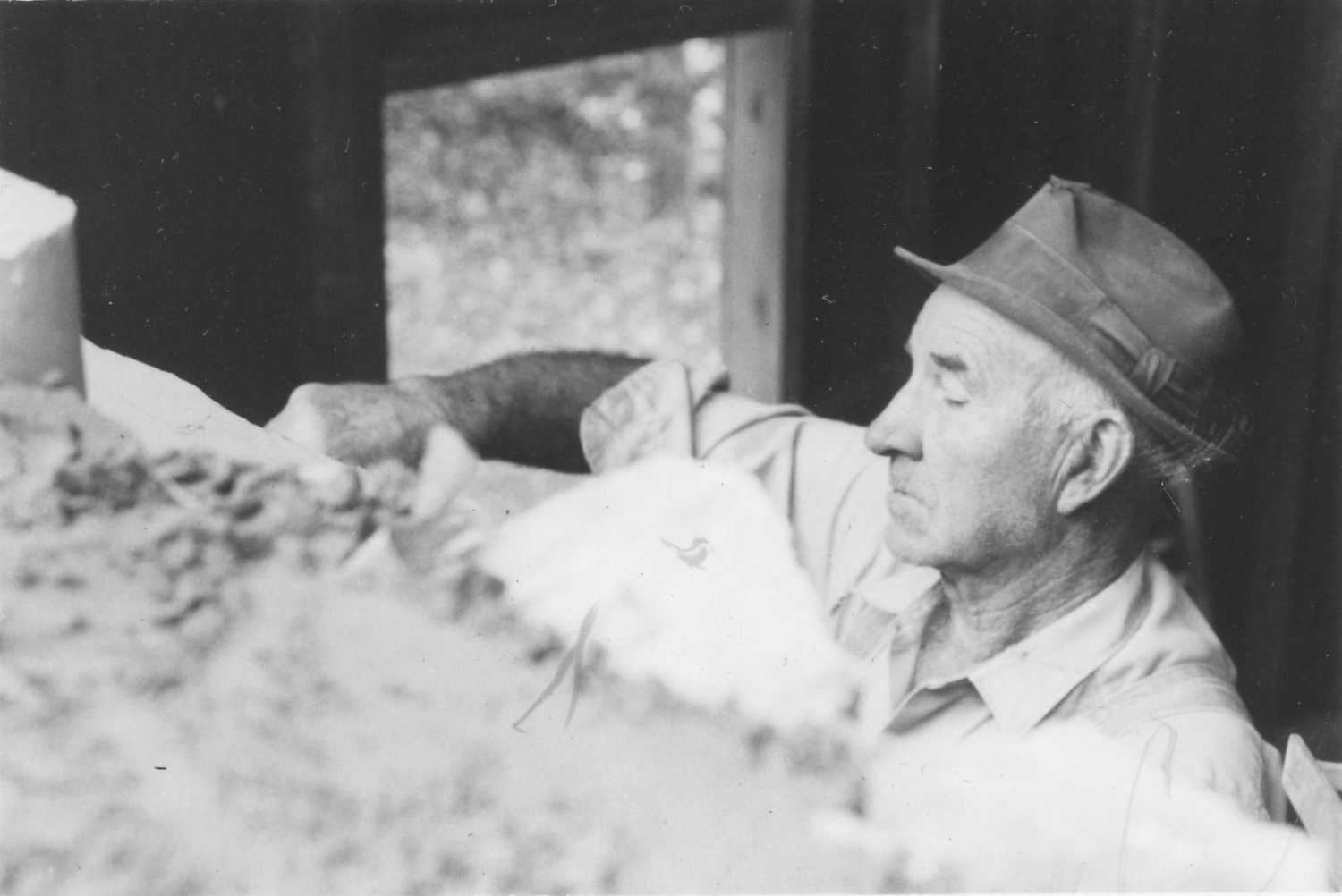
But 50 years ago, in the 1970’s, just after I had graduated from college and returned to the Southern mountains to write, I found myself looking forward to Sunday afternoons, when old-timers would “go visiting.” And the old-timiest of them all was my favorite relative, Ottis Kermit Cole, O.K. Cole, my great uncle. He worked as a stonemason, and he was an artist in stone - as his work throughout the region demonstrates even today. He would announce himself at the front door by an extended ring of the bell. When I opened the door, he would be standing there in his worn fedora hiding an almost bald head, a faded jacket, overalls with cuffs turned up to the tops of his tan work boots, and his wry smile already taking shape.
Inside, out of the wind or the cold or the rain, he would settle himself in his sister Bonnie’s Stickley rocking chair in the living room and accept a glass of water or sometimes a cup of leftover coffee. Three generations of Coles would gather around him in that small 1926 living room alive with its own memories and ghosts.
“What’s happening with your work crew?” Wilma would ask. This was in invitation to recall old stories, and inject a recent story or two, about a group of ragtag individuals who represented in all our minds the salt of the earth, the very essence of Southern Appalachian culture.
“Well,” Uncle Ott would say, “I hired a man the other day. We were having a pretty good conversation. Then he asked me, “How much can you pay me?” I said, “I’ll pay you what you’re worth.” He said, “Lord, I can’t live on that.”
Although we’d heard it many times before, we laughed as if it were brand new, because it introduced the self-deprecation of the mountain people as well as all our financial challenges in trying to scrape up enough money to pay property taxes, light bills, doctor expenses, and food from the grocery.
Uncle Ott continued about his recent hire. “We were building a patio and retaining wall up on Wolfe Cove Road for a woman from New Jersey. My man was laying stone steadily enough, but he took a break just as the woman looked out her window and spied him sitting down. She flew out her door and said something about him getting back to work. He stood up and said, ‘Lady, I don’t have a airplane motor inside me.’”
We all laughed again – we’d heard it before, but it was still funny.
Then came the finale from Uncle Ott: “ ‘She didn’t know when to quit. She said, ‘I don’t like your ATTITUDE.’ The man walked closer to her, came maybe two feet from her. He said, ‘I don’t like your ALTITUDE either.’”
This story was an act of resistance, a statement from the grassroots that arrogance or rudeness in the name of business would not be tolerated.
So the afternoon would go, story after story pulling in other characters from our extended family. I was a pure listener, but Bonnie –“Grandma Dyke” to me – played a crucial role in drawing out her younger brother. And Wilma would be enjoying all of it – herself participating across the board: actively listening, just as she had done in the 1940’s; reminding Ott of a long-lost time or cousin; even telling a short story or two of her own.
What is the significance of those Sunday afternoons? What good were they? Were they just words drifting off into the ether? Wilma loved those times so much because the words drew our extended family together. The humor and the art in that living room reminded us that the horror of a non-ethical culture symbolized by Watergate would pass. What would remain would be the common people, the people who would, in their own ways of wisdom, rise up when needed, make their voices heard, and preserve our democracy.