The French Broad River Partnership - Part Two
by Jay Hawthorne and Anne Keller

TITLE: French Broad River Partnership Cooperation in Action on Section IX after Helene
AUTHORS: Jay Hawthorne and Anne Keller
PERMISSION to publish granted by the authors
As part of the Hurricane Helene devastation of Western North Carolina (WNC) in September 2024, large amounts of man-made and natural debris were washed into the main stem of the French Broad River. Portions of riverside communities including houses, refrigerators, washing machines/dryers, propane tanks, roofs, and sheds were carried down river. Industries also lost equipment, tanks, building materials and inventories of goods staged in the river floodplain.
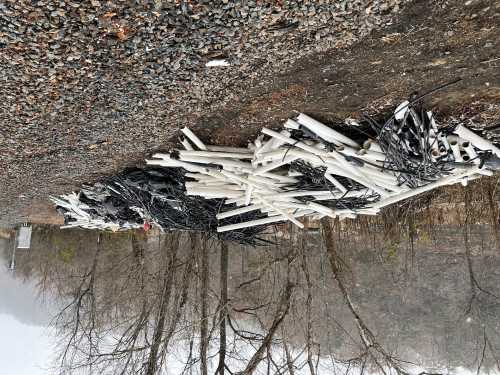
One particularly obnoxious man-made debris was PVC pipe and tubing from a Woodfin manufacturer. Untold amounts of white and black PVC material were swept away from that location and deposited on stream sides all the way through North Carolina and into Tennessee (40+ miles).
Besides the potential ecological damage from breakdown of the material over time, the aesthetic beauty of the downstream river was severely impacted. What was once almost a “wild and scenic” river gorge was now scarred with large mounds of this material intertwined with other manufactured materials from riversides and woody debris ripped from the shoreline. River rafting companies were not allowed on the river as the tubing rolls were unravelling and posing an added danger of swimmer encapsulation in the spaghetti-like strands.
One especially large debris “deposit” nearly ¼-mile long and eight feet deep was left on the Norfolk Southern (NS) railroad tracks near the Big Pillow rapid. NS quickly plowed through the piles to repair their severely damaged tracks, leaving even larger piles alongside the tracks.
French Broad River Partnership members including Blue Heron Whitewater, MountainTrue and local Trout Unlimited members started removing any manufactured debris they could handle with simple hand tools. It quickly became obvious that heavy equipment was necessary to lift large diameter trees and disentangle the man-made stuff from the wood.
MountainTrue (MT) had also begun collecting debris on sides of the river near the Stackhouse access with similar hand tools. They proved this method was successful up to the point of needing heavy equipment. Then, MT secured a large grant from North Carolina Department of Environmental Qualty to expand debris cleanup from all WNC rivers including the French Broad, utilizing contractors with heavy equipment where necessary. Around the same time, NS came through with their heavy equipment and removed 90+% of the debris beside their tracks.
But NS had tracks on only one side of the river. The other side had little or no access to the river for heavy equipment, was on private land, and held large debris deposits all along the riverfront. This river section is in the heart of Section IX and classified as Class 1-3 whitewater, highly coveted by rafters and river companies. The difficulty of access was huge. Working together, MT and residents gained access, and Flowline Energy Services (with expertise in ecologically safe practices) was hired for the job.
Flowline Energy Services brought 4 excavators, 2 barges, and a push boat. In 12 days, Flowline and MT work crews carefully crossed the river multiple times and retrieved debris that could not be handled with simple hand tool methods.
This last material along with earlier manufactured debris has been staged along NS tracks for later removal.
For questions about this story, contactJay Hawthorne at: johnjhawthorne@gmail.com